Note 01 / spatial method
How to read a station in six layers
A station connects city street to train through several thresholds. Reading each layer separately prevents one historical photograph from becoming a false present-day map.
.jpg)
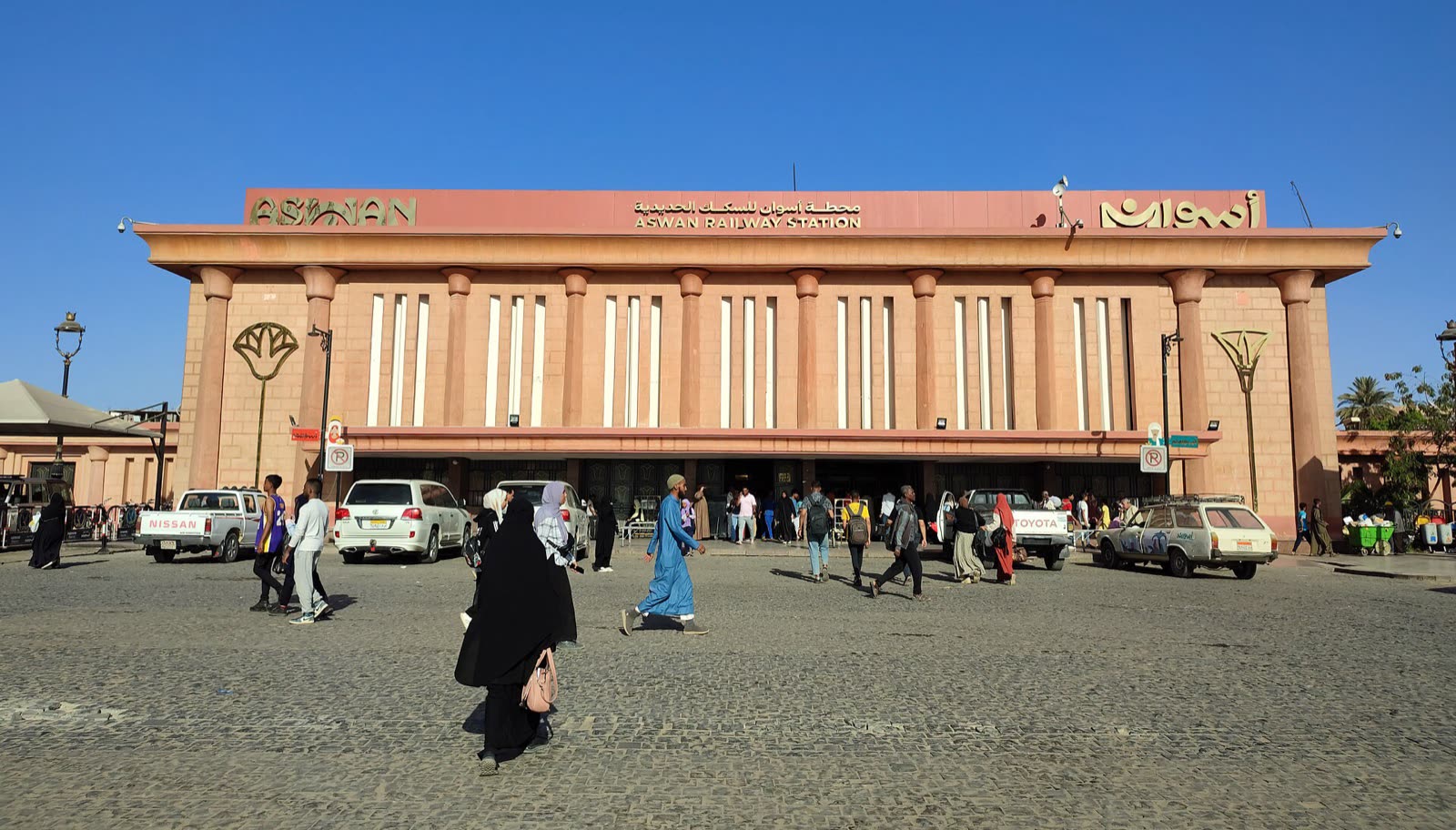
The familiar station photograph usually presents a single front: symmetrical entrance, city name and perhaps a clock. Travel uses a longer building. A passenger approaches across urban space, locates the correct threshold, finds current information, waits without blocking movement, reaches a permitted platform and finally matches a train and carriage. These six layers offer a reusable reading method, but they are not directions for a specific station today.
Layer one: the city edge
Begin before the façade. Record the relationship between station, road, pedestrian route, vehicle drop-off, shade and open forecourt. A wide paved area may support several flows rather than one grand approach. Barriers, planting, parked vehicles and temporary works can redirect entry after a photograph was made, so visual openness is not proof of current access.
Look for where people actually move, but do not follow a crowd blindly. Some routes may lead to local transport, staff access, a closed door or another facility. Current signs and responsible staff direction take priority.
Layer two: name and threshold
A city or station name helps confirm identity, especially where Arabic and Latin-script forms appear together. The largest central doorway may express architectural symmetry without being the entrance used by every traveller. Identify doors, gates, ramps and screening positions as visible features, then ask which route is currently open and appropriate.
Six-line station sketch
Forecourt → entrance → hall → information → platform threshold → train. Add the exit and onward connection on a second line. Break the arrow wherever a current route is unknown.
Layer three: hall and circulation
Inside, separate the central volume from movement at its edges. Ticket windows, seating, shops, columns, luggage and waiting groups can create smaller corridors within a large hall. The clearest architectural axis may not be the fastest or permitted passenger route. Stand to one side before studying the ceiling, not in the centre of a door or queue.
Symmetry also changes in use. One side may handle entry, another exit, while temporary barriers divide the floor. Describe the hall’s shape and the present circulation independently so that architecture is not mistaken for procedure.
Layer four: information
Signs, electronic boards, printed notices and announcements operate at different time scales. A permanent sign may identify platforms or facilities; a display may contain current departures; a paper notice may modify a routine. A photographed board is immediately historical. Never extract a platform, time or fare from an old image for present travel.
When information conflicts or cannot be read, confirm through an official or responsible current source. Translation tools can help with text, but they do not validate whether a notice remains active or applies to the intended train.
Layer five: controlled transition
The route from hall to platform may include gates, checks, stairs, passages or staff-controlled doors. This is not merely empty space between architecture and train. It regulates movement and can change. Keep documents accessible as required, follow present instructions and avoid photographing security activity or restricted areas.
Allow time appropriate to luggage, group needs and unfamiliarity, but do not convert one experience into a universal number of minutes. Station layout, access process and crowding vary.
Layer six: platform and carriage
At platform level, fix three references: safe waiting boundary, platform information and the direction of train movement when visible. The track is never a shortcut. Do not cross, descend or step beyond marked or instructed limits for a photograph. Platforms may serve several movements, and an empty track does not establish that no train is approaching.
Before boarding, match the current train, destination and carriage information as applicable. Let passengers leave first, keep doors clear and move luggage without blocking the edge. If anything remains uncertain, ask before entering the carriage.
Read the reverse arrival
Arrival repeats the layers in another order: carriage, platform, exit threshold, hall and city edge. The onward route may not mirror the entrance used earlier. Confirm the exit, meeting point and local transport rather than assuming that every door leads to the same forecourt.
The six-layer method makes a station legible without pretending it is fixed. Architecture provides the framework; current operation assigns the route. A strong field note preserves both, and leaves every uncertain arrow open for confirmation.