
01
Read a station in six layers
Move from forecourt and threshold to hall, information, platform and onward exit.
Open note →An Egyptian station field journal
A railway station is more than a façade and a clock. It is a sequence of city edge, entrance, information, waiting, platform and onward movement.
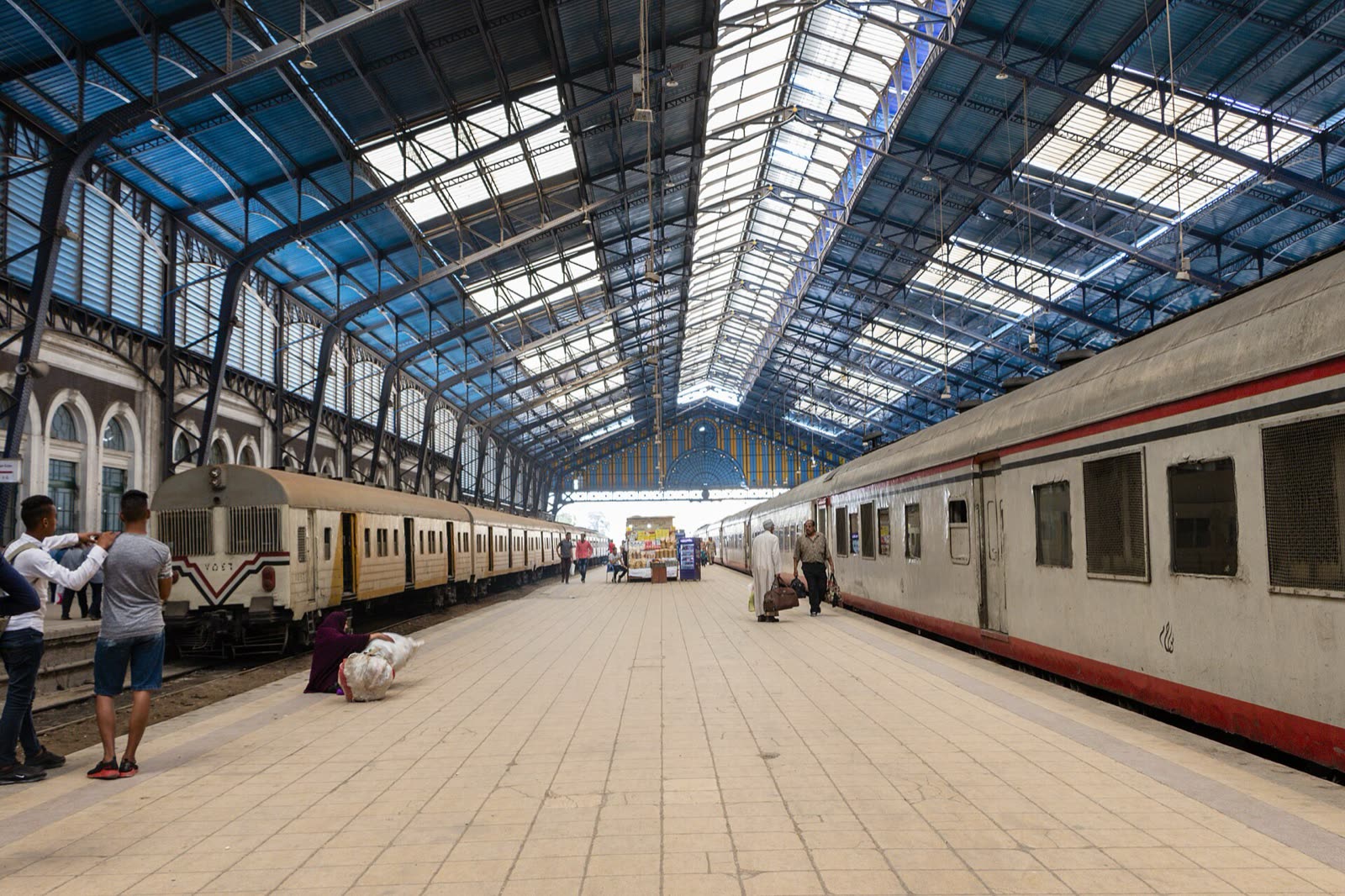
Four station notes
Each note keeps historical photographs separate from current schedules and treats platforms as working transport space rather than empty scenery.
Move from forecourt and threshold to hall, information, platform and onward exit.
Open note →
Read the city-to-station transition without treating a historical image as a current access map.
Open note →
Observe symmetry, gates, information and passenger flow while preserving present uncertainty.
Open note →
Reconnect track, edge, canopy, bridge and waiting zones instead of isolating a train.
Open note →The four-confirmation sequence
Use current official or responsible sources for train, date, station name, class, access rules and required documents.
Follow current signs and staff direction. A previous photograph cannot confirm the open door, screening route or ticket process.
Read the current display or announcement and confirm when uncertain. Do not infer a platform from track direction alone.
Match the current train and carriage information, keep the edge clear and let exiting passengers move first.

Field principle
People are finding carriages, carrying luggage, receiving passengers and performing station work. Stand outside circulation paths and behind the indicated safe boundary.
Ask before making an identifiable photograph. Never request a pose near the edge or step into a working zone for a symmetrical frame.
Luxor Train Station R03. Photo: Marc Ryckaert, CC BY 3.0.
Photography guide