Note 04 / trackside structure
Luxor: platform as section
From track bed to canopy, each horizontal band has another function. Read them together without treating visible rails as a route for passengers.
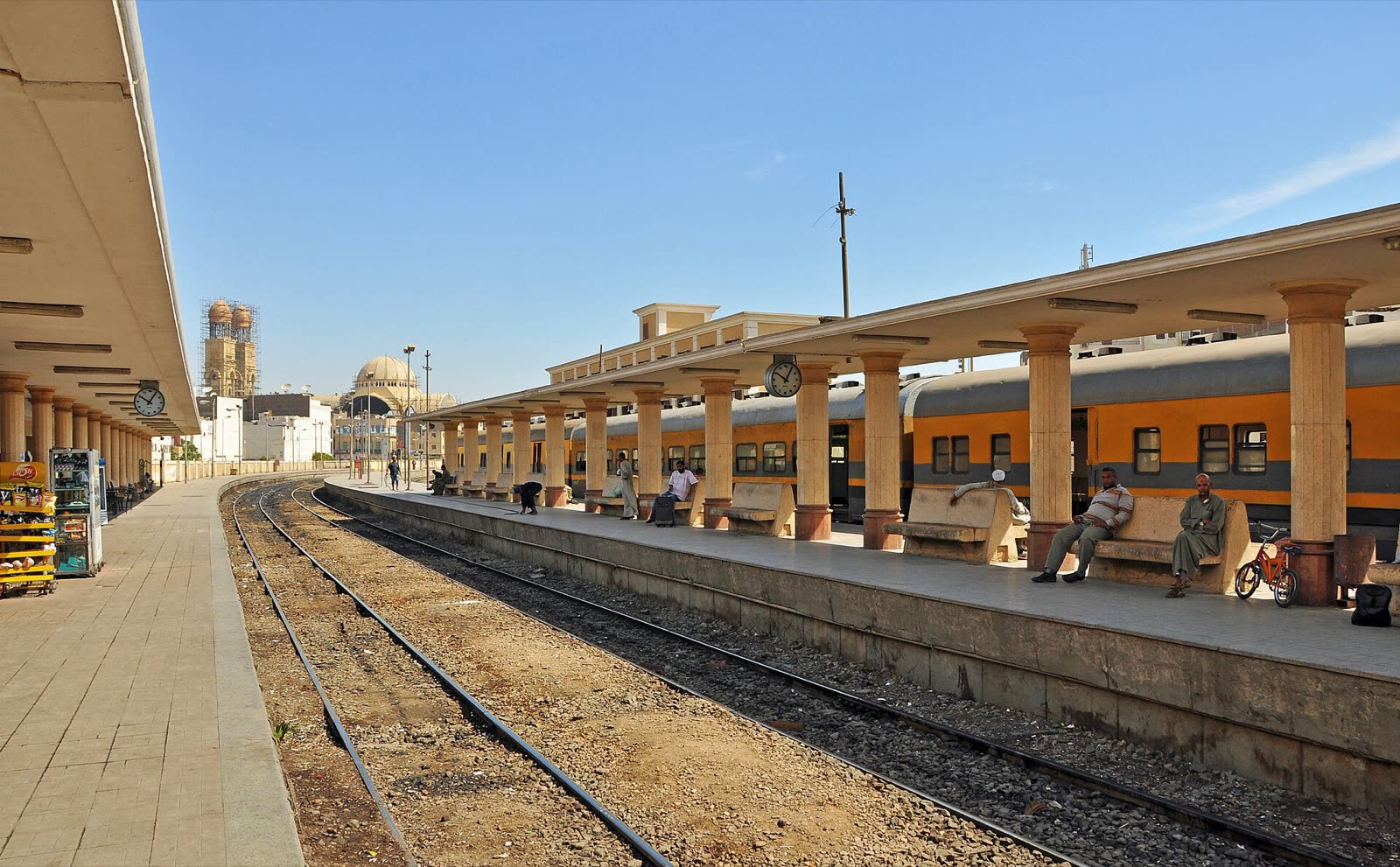

A platform photograph pulls the eye along the rails toward a vanishing point. That strong perspective can make the station feel like a single corridor, but the useful reading is crosswise. Track bed, platform edge, waiting surface, canopy, vertical circulation and opposite platform form distinct bands. Passengers belong only in permitted public bands; the visual continuity of rail and gravel is never an invitation to cross.
Fix the safe edge first
Before studying architecture, identify the current boundary indicated by markings, surface treatment, barriers or staff direction. Its appearance may differ from the historical photograph. Stand well within the waiting area and keep luggage, clothing and camera equipment away from the edge. An empty track can become active without providing the long warning a visitor expects.
Do not lean into the track space for a symmetrical frame or sit on the platform edge. Perspective can be photographed from farther back with a slightly higher or wider composition.
Separate rails from passenger routes
Parallel lines visually suggest movement, but they carry trains, not pedestrian circulation. Legitimate cross-platform routes use designated bridges, passages or controlled crossings where provided. Never infer a shortcut from another person’s movement or from old station photographs. Follow current signs and responsible direction.
Cross-section sketch
Track bed | safe boundary | clear circulation | waiting zone | columns and canopy | route to exit. Draw vertical separators instead of one arrow down the rails.
Read the platform surface in zones
Even without permanent markings, use reveals in furniture and behaviour: benches support waiting, doors create queues, columns narrow circulation, and stairs collect cross-flow. Leave a continuous route for passengers, staff and luggage. A clear place beside a wall or behind seating is usually better for observation than the visually perfect centre.
Temporary barriers, maintenance and a stopped train can reorganise these zones. Describe the observed arrangement with a date boundary instead of presenting it as the station’s permanent plan.
The canopy controls more than shade
A canopy frames views, shelters waiting areas and establishes a repeating structural rhythm. Its columns also interrupt movement and sightlines. Note where the roof begins and ends, how drainage or lighting is integrated and which areas remain exposed. Do not assume that shade visible in a photograph will cover the current boarding position.
Strong light beyond the canopy can hide detail on a train or opposite platform. A balanced photograph may require exposing for the working waiting area rather than the brightest track.
Platform information is time-specific
Numbers and permanent signs help orientation, but the train assigned to a platform can change. Confirm the current display or announcement and ask when uncertain. A caption should never turn the visible number in an old photograph into instructions for today’s service.
Carriage position can also matter. Move along the safe circulation route after current information is clear rather than waiting at the edge and rushing when the train arrives.
Approach changes the air and sound
A train’s arrival introduces movement, noise, displaced air and concentrated passenger flow. Secure loose items, move behind the applicable boundary and stop photographing if the camera distracts from awareness. Let passengers leave before approaching doors and keep the route available for anyone needing more time or assistance.
The train may obscure signs or split a group along the platform. Agree on a simple fallback before arrival and do not hold a door or ask someone to remain near the edge for a photograph.
Perspective can misstate distance
Telephoto images compress columns and make platforms appear crowded together; wide images lengthen the foreground. A low camera angle enlarges the rail and diminishes the waiting area. Include a wider context frame and a level horizon so viewers can distinguish visual drama from spatial evidence.
Photograph work with restraint
Railway staff, vendors, porters and passengers should not become anonymous decoration. Ask before making an identifiable person the subject, and follow all current restrictions. Do not photograph security, documents or operational controls. Make a small number of frames from a stable public position and move on when the platform becomes busy.
End with the exit route
A platform note is incomplete without the route back to hall and city. Locate the permitted exit before crowding increases, but confirm it in the present rather than memorising a historic image. Stairs, bridges and gates may operate differently for arrival and departure.
Luxor’s platform becomes legible as a section: active track, protected edge, circulation, waiting and shelter. The rails still provide the strongest line in the image, yet the responsible reading moves across them rather than along them.